Pocket springs technology is an advanced type of innerspring system where each spring is individually wrapped in its own fabric pocket. This design is what sets it apart from traditional open-coil systems, where all springs are linked together by a wire frame.
Pocket springs provide targeted support and motion isolation by using individual springs in fabric pockets, offering greater durability and a more responsive feel than open coil systems or foam. Foam cushions offer a plush, uniform feel and excel at pressure relief but may lack the bounce and breathability of pocket springs.
Pocket springs are composed of two main material types: the spring coil itself and the fabric pocket that encases it. Here are the primary materials used:
a. The Spring Coil
The coiled spring that provides the support is typically made of high-quality metals for strength and durability.
- High-Carbon Steel Wire: This is the standard and most common material. The steel is engineered and heat-tempered to ensure it is strong, flexible, and maintains its coiled shape (sag resistance) over many years.
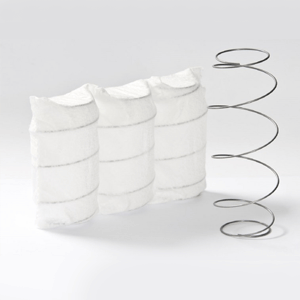
Gauge: The thickness of the wire (gauge) determines the spring’s firmness or tension (e.g., 1.2 mm for soft, 1.6 mm for firm). - Vanadium-Coated Steel: In higher-end springs, the steel wire may be coated with Vanadium (an alloying element) to enhance its strength, durability, and resistance to rust and corrosion.
- Tungsten Carbide: Some manufacturers may mention using this for its extreme strength and durability, though high-carbon steel is the dominant material.
- Fiberglass: This is an emerging, alternative composite material that is sometimes used because it offers good fatigue strength, is immune to rust, and can result in lighter spring units.
|
b. The Fabric Pocket (Encasing)
The individual coils are housed in a fabric sleeve that allows them to move independently.
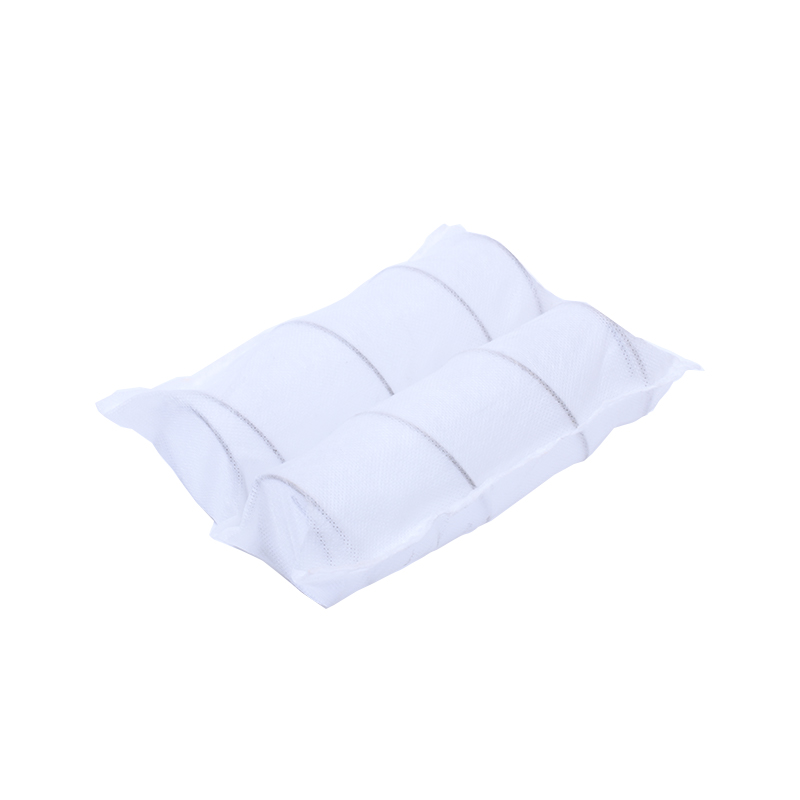
- Synthetic Spun Bond (Polypropylene/Polyester): This is the most common and cost-effective material. It’s a non-woven, durable fabric that is often thermally bonded (glued) to adjacent pockets to form the spring unit.
- Natural Calico: Used in premium and high-end mattresses, calico is a soft, breathable natural cotton fabric. Calico-encased springs are often sewn together (instead of glued) and are considered the highest quality, offering superior flexibility and breathability
|
c. Bonding Materials
The fabric pockets are joined together to form a complete spring unit using one of two methods:
- Hot-Melt Adhesive (Glue): This is the standard industrial method used to join the rows of synthetic pockets together.
- Stitching/Welding: Calico pockets are traditionally sewn together. Modern, glue-less systems use ultrasonic welding to join the synthetic fabric, which is more eco-friendly and avoids the use of adhesives.
|


